
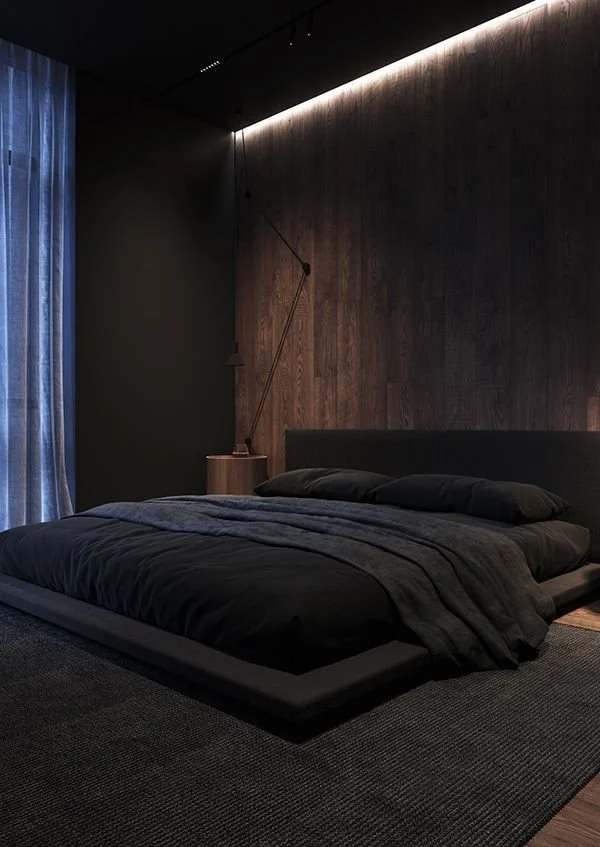
The Glymphatic System: Why Your Brain Needs Architecture to Detox at Night
Mar 2026
There is a biological process happening inside your brain every night one that neuroscientists only discovered in 2013, and one that may be the most compelling argument ever made for the design of a sleep environment. It is called the glymphatic system. And understanding how it works is no longer optional for anyone serious about longevity, cognitive performance, or the future of luxury hospitality.
The Nightly Power Wash Your Brain Depends On
During waking hours, your brain is relentlessly active. Every thought, decision, and sensory input generates metabolic byproducts chief among them, beta-amyloid and tau proteins, the same compounds that accumulate in the brains of Alzheimer's patients. For decades, scientists puzzled over how the brain clears this toxic debris. It has no conventional lymphatic vessels. The answer, when it finally arrived, was elegant and unsettling in equal measure.
The glymphatic system named for the glial cells that manage it operates as a cerebrospinal fluid (CSF) network that flows through channels surrounding the brain's blood vessels. During deep, slow-wave sleep, glial cells called astrocytes shrink by up to 60%, dramatically expanding the interstitial space and allowing CSF to surge through brain tissue, flushing metabolic waste into the body's peripheral lymphatic system for elimination. The brain, in essence, performs a full biological power wash but only when the conditions are precisely right.
The implications are profound. Poor sleep does not merely leave you tired. It leaves your brain chemically polluted. Research from the University of Rochester, where Dr. Maiken Nedergaard first mapped the system, shows that even a single night of sleep deprivation measurably increases beta-amyloid burden in the human brain. Chronic sleep disruption, over years and decades, has been directly linked to accelerated neurodegeneration.
The question that has rarely been asked until now is this: what role does the physical environment play in activating or suppressing this system?
Why Architecture Is a Neurological Variable
The glymphatic system does not activate on demand. It requires a very specific physiological state: deep non-REM sleep, low core body temperature, minimal sympathetic nervous system activity, and complete sensory absence no light, no noise, no thermal disruption. These are not preferences. They are biological prerequisites. And here is the architectural implication: every element of a room that interferes with those conditions is, quite literally, a neurotoxic variable.
A hotel room with ambient light pollution suppresses melatonin, delaying the onset of slow-wave sleep and shortening the window of glymphatic clearance. An HVAC system that fluctuates temperature by even 1–2°C across the night fragments sleep architecture, reducing deep sleep duration. A mattress that retains heat raises core body temperature, directly counteracting the thermic drop that triggers slow-wave onset. Even particulate matter in poorly filtered air has been shown to disrupt sleep quality and increase neuroinflammatory markers.
The environment is not passive. It is a constant biological input and in most spaces, it is working against the brain's most essential repair process.
The Sleep Lab as Neuroprotective Infrastructure
At Lif8, we approach sleep design as a form of neuroprotective engineering. The Sleep Lab is not an amenity. It is a precisely calibrated biological system, built around the physiological requirements of glymphatic activation.
Every decision from the specification of blackout architecture to the calibration of circadian lighting is traceable to a specific mechanism in the sleep science literature.
Thermal precision is non-negotiable. The optimal sleep temperature for glymphatic activation sits between 15.5°C and 19°C. We integrate temperature-regulating textile systems and medical-grade climate control that maintains a stable thermal envelope throughout the night, eliminating the micro-arousals caused by temperature drift. Your body's core temperature drops as it should. The glymphatic system activates on schedule.
Circadian lighting does more than set a mood. Light at the wrong wavelength even at very low intensity suppresses melatonin and delays the transition into slow-wave sleep. The Sleep Lab uses amber-spectrum ground-level lighting strips activated by motion for any nocturnal movement, paired with BrainLit intelligent systems that shift spectral output across the day in alignment with the body's internal clock. The environment entrains the circadian rhythm rather than disrupting it.
Air architecture is the most underestimated variable in sleep design. CO₂ accumulation in a poorly ventilated room begins to impair sleep quality at concentrations that would register as perfectly acceptable by standard building codes. We integrate Airthings continuous monitoring with ultra-silent positive-pressure ventilation systems that maintain CO₂ below 800 ppm the threshold above which sleep fragmentation begins to increase measurably. Particulate filtration operates at HEPA-equivalent standards. The air your client breathes during sleep is clinical-grade.
Acoustic isolation eliminates the micro-arousal triggers that fragment sleep architecture without ever waking the occupant. We design structural acoustic decoupling into the room itself, not as a retrofit, but as a foundational design decision because the brain cannot enter slow-wave sleep in an acoustically unstable environment.
Sensory completion the final, often overlooked layer extends to every point of contact. Bathroom amenities are sourced from Grown Alchemist's clean-science formulations, chosen for their capacity to calm the sensorineural system. The RoomBar is reimagined around functional nutrition: tart cherry concentrates for natural melatonin precursors, magnesium glycinate formulations, adaptogens that support the parasympathetic transition. The room does not merely host sleep. It produces it.
The Longevity ROI of Sleeping in the Right Environment
For the HNWI client investing in private residential design, or the hotelier competing in the ultra-luxury tier, the glymphatic argument reframes the entire value proposition of a sleep environment. This is not a pillow menu. It is neuroprotection at scale.
The research is unambiguous: consistent access to deep, architecturally optimized sleep extends cognitive healthspan, reduces Alzheimer's risk, improves metabolic regulation, and lowers systemic inflammation the mechanism underlying virtually every chronic disease associated with aging. A well-designed Sleep Lab is, by any rigorous measure, the most cost-effective longevity intervention available.
As the longevity field matures in 2026, the shift is decisively toward evidence-based, environment-first strategies over extreme interventions Hone Health and the glymphatic system sits at the center of that shift. The brain's capacity to repair itself is not a fixed biological given. It is an architectural variable. And the spaces we design determine whether that capacity is fully realized or systematically suppressed, night after night, year after year.
The question is no longer whether your environment affects your brain. The question is whether the spaces you build, own, or offer are working for the biology or against it.
If you are developing a property where sleep is a genuine differentiator not a feature, but a physiological commitment we would be glad to speak. Contact the Lif8 team to explore how a Sleep Lab integration can transform your project into a verifiable longevity asset.