
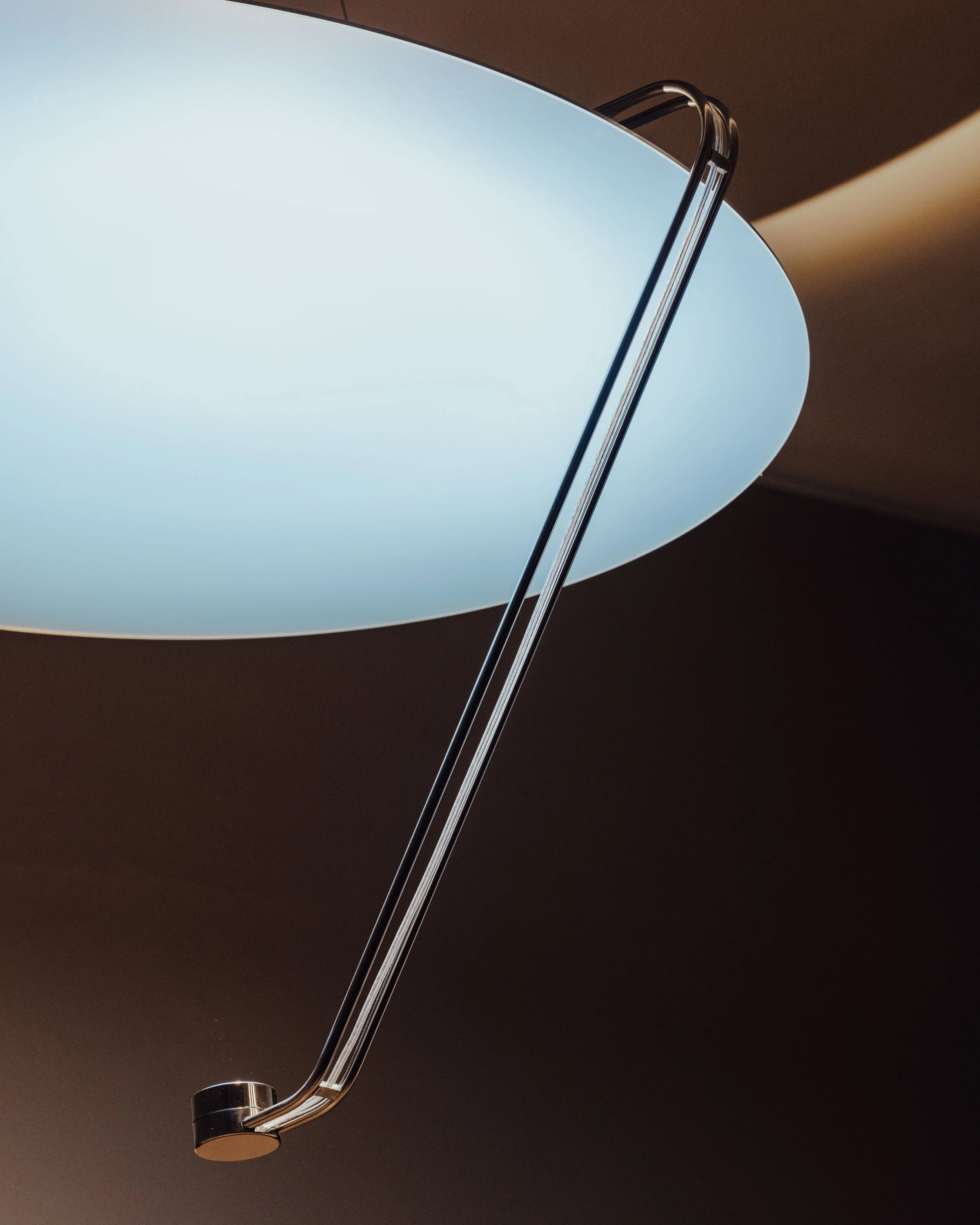
Circadian Lighting Design: How Light Architecture Regulates Melatonin and Longevity
Mar 2026
There is a biological signal more powerful than any supplement, more precise than any hormone protocol, and more accessible than any pharmaceutical intervention. It is light. And for the overwhelming majority of people alive today living, sleeping, and working inside artificial environments it is working against them.
The science is no longer ambiguous. There is now sufficient evidence to support the widespread introduction of circadian lighting that adjusts light intensity and blue content across day and night to maintain robust circadian entrainment and health Frontiers a consensus reached by a global panel of circadian researchers. What remains rare is the translation of that science into the built environment at the standard of precision it demands. That translation is exactly what Lif8 was designed to deliver.
The Suprachiasmatic Nucleus and the Architecture of Time
The human body does not experience time abstractly. It reads it through light. Buried in the hypothalamus, the suprachiasmatic nucleus (SCN) functions as the master circadian pacemaker a neurological clock synchronized to the 24-hour solar cycle through a direct pathway from the retina. The photoreceptors responsible for this entrainment are not the rods and cones of visual perception. They are intrinsically photosensitive retinal ganglion cells (ipRGCs), densely packed with the photopigment melanopsin, and exquisitely sensitive to light in the 460–480 nm blue wavelength range.
When these cells detect blue-spectrum light in the evening, they signal the SCN to suppress the pineal gland's secretion of melatonin the hormone that governs the transition into sleep, regulates core body temperature, and orchestrates the entire cascade of nocturnal biological repair. The result is not merely delayed sleep onset. It is a systemic disruption of the biological processes that melatonin governs: immune modulation, cellular repair, metabolic regulation, and the activation of the glymphatic system that clears neurotoxic debris from the brain.
The implications for architecture are immediate and unignorable. There is more than a five-fold variation in nocturnal melatonin suppression between different LED light sources at the same lux intensity, depending on the blue irradiance of each source. Frontiers Two rooms of identical apparent brightness can produce radically different biological outcomes not because of what the occupant does, but because of decisions made at the specification stage by an architect or interior designer who was never briefed on photobiology.
What Wrong Lighting Actually Does to the Body
The consequences of chronic circadian disruption extend well beyond poor sleep. Scientific consensus confirms that repetitive and prolonged exposure to light at night bright enough to cause circadian disruption increases the risk of sleep disorders, obesity, diabetes, cardiovascular disease, and depression. Frontiers The mechanism is melatonin suppression and it operates at light levels most people would consider negligible.
Blue light at 464 nm, overlapping directly with the melanopsin action spectrum, maintained melatonin suppression at 7.5 pg/mL after two hours of evening exposure, while red light at 631 nm allowed recovery to 26.0 pg/mL under the same conditions. PubMed Central That is not a marginal difference. It represents the gap between a body primed for deep regenerative sleep and one held in a state of biological alertness regardless of how tired the occupant feels.
The standard hotel room, however luxurious its furnishings, is almost universally designed around visual aesthetics rather than photobiological function. Recessed LED downlights, backlit mirrors, illuminated minibars, and standby indicator lights all contribute to an ambient blue-spectrum environment that suppresses the very hormone the guest's biology requires to recover.
The Circadian Lighting Framework: What Lif8 Integrates
The Lif8 Sleep Lab does not treat lighting as atmosphere. It treats lighting as medicine calibrated, dynamic, and precisely sequenced to support the body's internal clock through every phase of the 24-hour cycle.
The framework rests on a principle that is simple in conception and technically demanding in execution: the spectral and intensity profile of light in a space must change with time, not merely with occupant preference.
Morning activation begins with high-melanopic illuminance cool, blue-enriched light of sufficient intensity to deliver the photonic signal that advances circadian phase, sharpens cortisol awakening response, and establishes the hormonal baseline for the day. Dynamic lighting patterns that shift forward with the body's circadian timing have been shown to produce a 1.5-fold increase in melatonin secretion compared to static lighting, with measurable improvements in sleep quality. ScienceDirect The morning light environment is not decoration. It is the first hormonal intervention of the day.
Evening transition begins two to three hours before the intended sleep window. Blue-enriched light in the three hours before bedtime disrupts nocturnal sleep, phase-delays the circadian system, and disrupts circadian rhythms more than blue-depleted light at the same intensity. Frontiers We eliminate this exposure entirely. Lighting shifts to amber and warm-spectrum sources, dropping melanopic lux while maintaining sufficient photopic output for comfort. Bedside systems move to 2700K or below. Motion-activated amber strip lighting at ground level a Lif8 signature eliminates the cortisol spike triggered by traditional overhead lighting during any nocturnal waking.
Blackout completion seals the environment. True biological darkness is not dim lighting. It is the complete absence of photonic input to the retina. External blackout architecture is engineered as a structural element of the Sleep Lab, not as a curtain specification. Even small amounts of light at night can suppress melatonin production and disrupt sleep cycles. We treat that threshold as a non-negotiable design constraint.
Circadian Lighting as a Longevity Asset
For architects, developers, and hoteliers, the economic argument for circadian lighting is inseparable from the scientific one. The global wellness real estate market, of which circadian-designed environments are a rapidly growing segment, is expanding at a rate that reflects a fundamental shift in how high-net-worth clients evaluate property. They are no longer purchasing square footage or finishes. They are purchasing biological outcomes.
A Sleep Lab designed to Lif8 standards does not merely offer better sleep. It offers measurable improvements in cortisol regulation, metabolic flexibility, immune resilience, and through the sustained activation of glymphatic clearance long-term neuroprotection. These are not wellness amenities. They are longevity infrastructure.
Dynamic, tunable lighting systems that adjust brightness and color temperature in alignment with circadian needs support better sleep, improved mood, and boosted cognitive function during the day. Illuminating Engineering Society For a flagship hotel competing in the ultra-luxury tier, that is not a feature. It is a differentiation that cannot be replicated with soft furnishings or a premium mattress specification.
The science of light and longevity has reached a threshold of clarity that leaves very little room for architectural neutrality. Every lighting decision in a sleep environment is a biological decision. The question is whether it is being made deliberately or by default.